Gentle forward folds encourage lengthened exhalations, which stimulate the parasympathetic response and reduce anxious arousal. Soften your knees, hinge at your hips, and let your head drop heavy, signaling safety to your nervous system through slower, deeper breaths.
How Postures Soothe an Anxious Nervous System
Mild inversions like legs up the wall shift blood flow, ease lower back tension, and promote a sense of being cradled. This restorative angle supports venous return and quiets racing thoughts when paired with a smooth count of four in, six out.
Child’s Pose: Retreat and Reassure
Knees wide, big toes together, forehead supported on a block or folded blanket. Let the back body expand with breath like opening a parachute. Whisper reassurance to yourself with each exhale as shoulders soften away from your ears.
Cat–Cow with Ocean Breathing
Synchronize spine waves with steady, quiet breath. Inhale for Cow, letting the heart roll forward; exhale for Cat, rounding and releasing the jaw. This rhythmic pairing entrains a calmer tempo, replacing anxious spikes with predictable, self-directed motion.
Seated Forward Bend with Gentle Counting
Sit tall on a cushion, hinge forward until sensation is kind, then pause. Inhale for four, exhale for six, maintaining warmth in the hamstrings. Counting anchors attention, and the fold’s containment helps thoughts settle without force.
Evening Unwind Ritual
01
Legs Up the Wall to Drain the Noise
Scoot one hip to the wall, roll onto your back, extend your legs upward, and support your low back if needed. Let thoughts float by while the breath stays deep and even, encouraging a steady descent into quiet.
02
Supported Bound Angle for Soft Belly Breathing
Place a bolster along your spine, soles of feet together, knees cradled by blocks. This receptive pose opens the chest, frees the diaphragm, and invites tender self-talk. Add a light blanket over the hips for comforting weight.
03
Savasana with a Gentle Body Scan
Lie comfortably, eyes heavy, and guide attention from toes to scalp. Name each region and release it on the exhale. The deliberate scan replaces rumination with presence, preparing your mind to surrender into unhurried rest.
Personalization and Safety
Honor Your Edges and Choose Pace
Stay well below pain and keep breathing conversational. If a pose heightens panic, back out, add support, or switch to a steady seated breath. Your sense of safety matters more than any external alignment cue.
Smart Prop Support
Blocks, bolsters, blankets, and walls transform poses into nurturing containers. A blanket under the head, a strap around the feet, or a bolster under knees can soften intensity and make calm reliably repeatable session after session.
When to Modify or Skip
Recent injuries, blood pressure considerations, or pregnancy may alter posture choices. Replace deep inversions with gentler legs up the wall, or shorten holds. Consult a professional when unsure, and trust your body’s honest feedback first.
Studies associate slow breathing, forward folds, and mild inversions with improved heart rate variability and reduced perceived stress. While results vary, many people report calmer focus after short sessions, especially when exhalations are lengthened relative to inhalations.
Stories and Science That Encourage Practice
Before presentations, Maya closes her laptop, folds over her thighs in a seated chair pose, and counts five slow breaths. She stands taller, voice steadier, and colleagues notice. The posture becomes her portable sanctuary anywhere she speaks.
Micro-Practices and Anchor Cues
One-Minute Mountain Pose Check-In
Stand tall with feet hip-width, knees soft, spine long. Inhale to broaden your collarbones, exhale to root through your heels. Name three sounds around you to anchor attention, then carry that steadiness into your next task.
Place tongue on the roof of your mouth, drop your shoulders, and slightly part the teeth. Combine with a gentle seated forward tilt. This tiny posture shift melts tension that often disguises itself as anxious mental chatter.
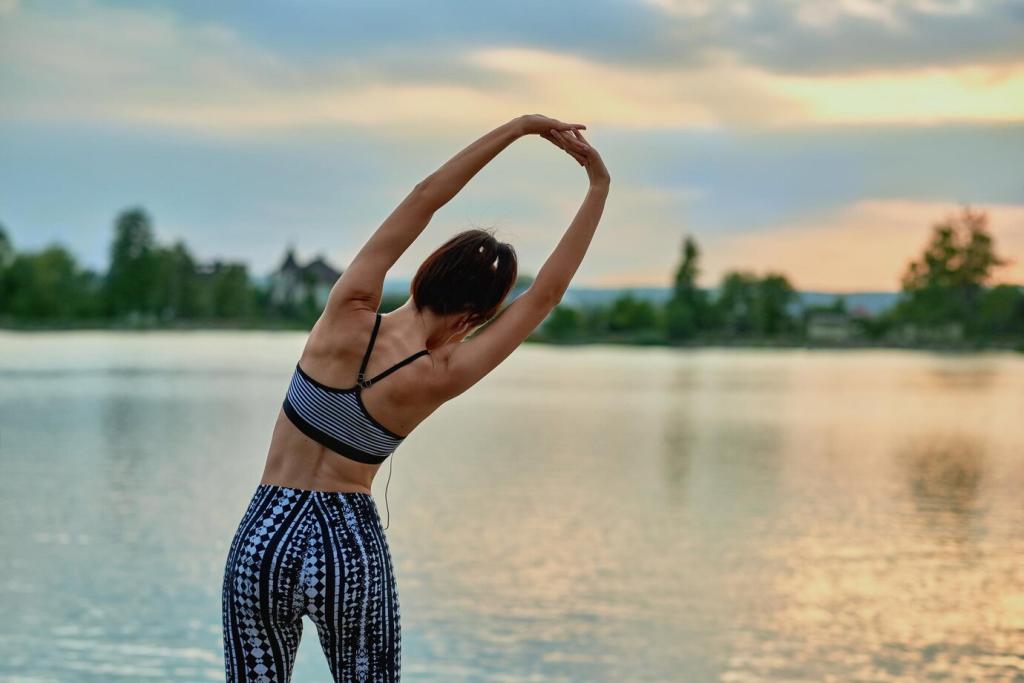
Lift arms on an inhale, lower them on a longer exhale, matching movement to breath speed. After ten cycles, notice how your thoughts follow the rhythm you created, like a metronome replacing noise with steady presence.